
It is pretty much the same thing when we talk about fear and anxiety—the emotions are very similar, but the realities surrounding the two experiences are quite different.
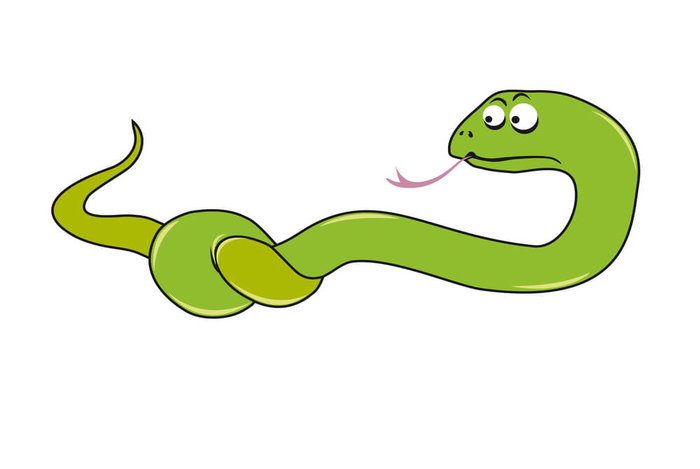
First, of all fear is based on something that is happening or very likely to happen. For example, if we are going for a walk, hiking, fishing or just enjoying the great outdoors and we suddenly see a snake—the feeling we experience is fear. However, we enjoy the experience before and after the snake sighting assuming that the snake is harmless and we only see one!
That is fear. Anxiety is an irrational fear—we might use the word “worry”—that is based on things that either have not yet happened or are not very likely to happen.
This is the real problem with anxiety—it interferes with our daily lives. Going back to the idea of enjoying the great outdoors, many people are afraid of snakes, and there is nothing particularly harmful or unhealthy about that in itself. The problem comes in when we cannot enjoy time in the great outdoors because there might be a snake.
We are unable to let ourselves fully enjoy the experience. And it goes beyond enjoying a day in the outdoors–many of us are unable to enjoy our lives because of what might happen.
 What makes matters even more complicated is that we are often not aware of what it is exactly we are worried or anxious about. We may find ourselves wanting to wait in the car while our friends go exploring. We may find ourselves wanting to stay home—even though another part of us wants to go out and do something we enjoy. Sometimes, the anxiety and worry don’t even feel like worry or fear—it just feels like “something” isn’t right.
This feeling is sometimes emotional, but other times it is physical. For example, we might notice that when we are in a lot of traffic we suddenly feel sweaty, have tightness in our chest, or maybe even feel strange bodily sensations that we cannot explain (tingling in arms or fingers, numbness, or the feeling that we can’t catch our breath).
These symptoms sometimes cause people to drive to the nearest emergency room or walk-in clinic. The doctor can’t find anything wrong (except for elevated blood pressure), and the person goes home.
Think what happens then. All those sensations that were experienced in the body become the new focus of worry. What is wrong with me? Am I having mini-strokes? They didn’t even do any tests—what if I was having a heart attack? Hence, anxiety has the uncanny ability to create more anxiety!
What actually had the person in the example worried was the traffic (or more likely a fear of something that might happen in the traffic such as a breakdown, or a wreck). The thoughts of having a wreck or having the car break down might not have even occurred the person, but the anxiety was there nonetheless.
Now, supposing that a person was driving on a busy highway and suddenly a large truck tried to change lanes and there was nowhere to go. In this scenario we are experiencing fear, just like the snake example. Fear is actually a beneficial and even necessary emotion. Fear protects us. Fear makes us more alert. The famous “fight or flight” response is related to fear.
However, fear without anything in our environment to necessitate concern is anxiety. Usually when we are truly experiencing fear, we know exactly what we are afraid of. Of course, sometimes we know what we are afraid of, but the fear is still irrational this could be anxiety as well, but if it is irrational (that is highly unlikely to happen) then it is anxiety.
So how do we know if we might be experiencing anxiety? The symptoms are not always obvious, and sometimes mimic serious medical problems. If you ever believe that you are experiencing a medical problem—it is always best to go to a doctor and get yourself checked out.
Having said that, anxiety can be the culprit of bodily experiences and discomfort. Some basic clues that you might be experiencing anxiety will be listed in just a second, but keep in mind that we all have some of these symptoms from time to time. This list is not meant to self-diagnose, but to help you determine if you might need to take some steps to get your anxiety under control:
- Feeling like “something” bad is going to happen
- Shortness of breath
- Tightness in the chest or throat
- Trouble catching one’s breath
- Excessive worrying
- Worrying about things that are unlikely to happen
- Tingling or numbness in arms, fingers, or legs
- Feeling afraid for no apparent reason
- Your worries or concerns prevent you from doing things you want or need to do
 What anxiety is not
Okay, so before we go on, let’s talk about what anxiety is not: anxiety is not being afraid when something is actually happening that should or could cause fear in a person. For example, many people are afraid of spiders—if this fear causes you to find the nearest shoe, newspaper, or can of spray then you are probably not dealing with anxiety.
If this fear causes you to leave a room or end an activity—then you might be dealing with anxiety. However, having some particular thing that scares you is not really anxiety.
Anxiety is also not the fear we feel when we are about to face something that we suspect will be unpleasant (a school test, a sudden call to the boss’s office, or even the dreaded text from one’s partner: “We need to talk”). Of course, if we allow ourselves to obsess our thoughts with these things, dwell on them, and let them keep us from enjoying ourselves or from being productive then we might be talking about anxiety, but in reality, some things will cause us to feel fear and will interfere with our daily lives—it becomes anxiety based on intensity and frequency.
Let’s use another analogy: I am sure we have all been asked to fill out surveys or other questions that ask us to rate things on a scale of one to ten. Picture two scales of one to ten in your mind—or if you’re motivated draw two scales of one to ten:
+-+-+-+-+-+-+-+-+-+
1 2 3 4 5 6 7 8 9 10
+-+-+-+-+-+-+-+-+-+
1 2 3 4 5 6 7 8 9 10
On the top scale rate the actual event, situation, or likelihood of that thing happening that you are worried about.
On the bottom scale rate your reaction to that event that you are worried about happening.
Now, if the two ratings match—you are experiencing healthy fear. If the two ratings closely match—you are experiencing legitimate and appropriate fear. If the two ratings are vastly different then you are likely experiencing anxiety.
Of course, you may overrate the top scale, maybe you could ask a friend or loved one to help you, or you might just try to remove yourself mentally, and pretend that the event is happening to someone else. Do not allow yourself to listen to that voice that tells you why your situation is worse or different, just rate the actual event in terms of its severity. Then rate your response or reaction.
If you can do this exercise honestly (honestly with yourself that is), then you can determine how rational your worry is.
Suppose you receive a phone call saying that your older brother had a fender bender in a grocery store parking lot, and he is being taken to the emergency just to make sure everything is fine–he is awake, alert, and feeling okay except for a little pain in his shoulder. On an objective scale, the severity would probably be perhaps a 3 or a 4. A reasonable reaction would be a 4 to a 6. If you want to get really creative, you can add decimal points!
Now suppose that you receive a phone call that a close relative is in the ICU of the local hospital following a wreck on a freeway. The objective rating would probably be an 8 or 9 (perhaps even a 10). Therefore, it would be appropriate to react to the 9 to 10 range.
The problem with assessing any mental health issue is that the mechanisms that cause the symptoms of mental illness are present in all of us, and they usually serve a good purpose, but sometimes the mechanisms become overactive, and then we find ourselves overreacting, underreacting, or becoming anxious, depressed, psychotic, manic, or whatever it is we become.
Perhaps you are feeling a little anxious yourself or can identify these things in a friend or loved one. Or perhaps you are just a little curious. In any case, you can check out when we get into detail on what anxiety is, where it comes from, and when to seek professional help—we will discuss things you can do at home to help with your anxiety or perhaps some helpful tips to give to a friend.